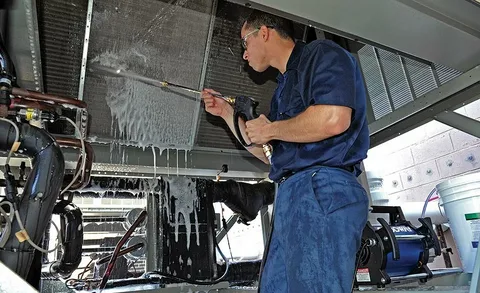
Commercial buildings depend on HVAC systems to maintain comfortable indoor temperatures and consistent airflow throughout the day. Offices, hotels, restaurants, retail stores, and other facilities often operate their heating and cooling equipment for extended hours. Over time, dust, grease, pollen, and other airborne particles collect on HVAC coils, affecting how well the system performs.
Dirty coils can reduce heat transfer, restrict airflow, and force HVAC equipment to work harder to maintain the desired temperature. These problems may increase energy consumption, reduce cooling capacity, and contribute to avoidable equipment wear.
Regular HVAC coil cleaning helps commercial property owners maintain system performance and address buildup before it becomes a larger maintenance issue. Understanding why this service matters can help facility managers make better decisions about building maintenance.
1. Improves HVAC System Efficiency
HVAC coils transfer heat as air moves through the heating and cooling system. Evaporator coils absorb heat from indoor air, while condenser coils release heat outside. Both need relatively clean surfaces to perform this process effectively.
When dirt and debris accumulate between the coil fins, they interfere with heat transfer. The system may need to run longer to reach the temperature set on the thermostat. Fans, compressors, and other components may also experience additional operating demands.
Cleaning heavily contaminated coils helps restore the conditions needed for effective heat exchange. The actual improvement depends on how dirty the coils were before service and the overall condition of the HVAC equipment.
For commercial buildings with long operating hours, maintaining clean coils can support more consistent system efficiency over time.
2. Helps Control Commercial Energy Costs
Energy consumption is an important operating expense for many commercial properties. HVAC systems can account for a significant portion of a building’s electricity use, particularly in facilities that require continuous cooling.
When coils become dirty, the system can lose efficiency. Reduced heat transfer may cause longer operating cycles and additional energy use as the equipment works to maintain indoor temperatures.
Regular coil cleaning can help reduce this unnecessary strain when buildup is affecting performance. However, cleaning alone does not guarantee a specific percentage of energy savings. Results depend on the system design, contamination level, operating schedule, and other maintenance conditions.
Facility managers should consider coil cleaning as part of a broader energy-management plan that includes proper filtration, equipment inspections, and routine HVAC maintenance.
3. Supports Better Indoor Air Quality
Commercial HVAC systems circulate air throughout occupied spaces. If internal components are dirty, accumulated dust and other contaminants can become part of the system’s overall cleanliness problem.
Evaporator coils operate in conditions where moisture is present. When dirt collects on these surfaces and drainage areas, the combination of moisture and organic material can contribute to unwanted biological growth if conditions allow it.
Professional coil cleaning helps remove accumulated material from coil surfaces and associated components. This can support a cleaner HVAC system, although coil cleaning by itself does not guarantee healthy indoor air quality.
Indoor air quality also depends on filtration, ventilation, humidity control, duct cleanliness, and the building’s overall maintenance practices.
4. Helps Maintain Consistent Cooling and Heating
Uneven temperatures can create problems in commercial environments. Employees may complain about uncomfortable work areas, customers may avoid poorly cooled spaces, and temperature-sensitive operations may become more difficult to manage.
Dirty coils can reduce the system’s ability to transfer heat effectively. Restricted airflow across an evaporator coil may also affect the amount of conditioned air reaching different areas of the building.
This can result in longer cooling cycles, reduced system capacity, or inconsistent temperature control.
Regular inspection and cleaning help HVAC systems operate under more suitable conditions. If certain rooms remain too warm or too cold after coil maintenance, the issue may involve ductwork, controls, insulation, equipment sizing, or airflow balancing.
5. Reduces Unnecessary Strain on HVAC Components
When coils are heavily contaminated, the HVAC system may have to work harder to provide the same level of heating or cooling. This can increase operating demands on components such as fans, compressors, and other equipment.
Continued operation under poor conditions may contribute to premature wear, especially when coil contamination is combined with neglected filters, drainage problems, or other maintenance issues.
Cleaning coils helps remove one potential source of unnecessary system strain. It does not prevent every mechanical failure, but it supports the conditions needed for proper equipment operation.
For commercial property managers, this is an important part of protecting HVAC equipment and reducing avoidable maintenance problems.
6. Helps Prevent Moisture and Drainage Problems
Evaporator coils remove moisture from indoor air as part of the cooling process. That moisture collects as condensation and should flow into the drain pan before leaving through the condensate drain line.
Dust, debris, and biological buildup can collect around the coil and drain pan. If drainage becomes restricted, water may accumulate or overflow, potentially damaging nearby equipment, ceilings, walls, or flooring.
During professional coil maintenance, the technician can inspect the associated drain pan and drainage components for signs of buildup or improper drainage.
Keeping these areas clean helps support normal condensate removal and reduces the risk of avoidable water-related problems.
7. Supports More Reliable HVAC Operation
Commercial buildings often depend on HVAC systems during business hours. A breakdown during a busy period can affect employee comfort, customer experience, and daily operations.
Neglected coils may contribute to reduced capacity, poor airflow, or excessive operating demands. These conditions can make an existing HVAC problem more difficult to manage, particularly during periods of high heating or cooling demand.
Regular inspections help identify contamination and other developing concerns before they affect system performance more seriously.
For facility managers, planned maintenance is generally easier to coordinate than responding to unexpected equipment problems. Scheduling coil cleaning during suitable maintenance periods can also reduce disruption to normal building operations.
8. Protects HVAC Equipment and Long-Term Investment
Commercial HVAC equipment represents a significant investment. Building owners want their systems to provide dependable service without unnecessary repairs or premature replacement.
Coil contamination can interfere with heat exchange and contribute to additional operating demands. When combined with poor filtration, neglected maintenance, or drainage issues, it may contribute to broader equipment problems.
Regular cleaning helps maintain accessible coil surfaces and provides an opportunity to inspect the surrounding components. Technicians may also identify damaged fins, corrosion, leaks, or other conditions that need further attention.
A well-planned maintenance program supports equipment care and gives property managers a clearer picture of the system’s condition.
How Often Should Commercial HVAC Coils Be Cleaned?
There is no single cleaning schedule that works for every commercial building. The right frequency depends on several factors:
- Building activity: Restaurants, manufacturing facilities, and busy commercial spaces may expose equipment to more grease, dust, or airborne particles.
- Outdoor conditions: Units near roads, construction sites, landscaping, or industrial areas may collect debris more quickly.
- Operating hours: Systems that run for extended periods may need more frequent inspection.
- Filtration quality: Poorly fitted or neglected filters allow more contaminants to reach coil surfaces.
- Equipment design: Coil accessibility, system type, and manufacturer recommendations influence maintenance requirements.
Commercial property managers should arrange regular inspections and establish a cleaning schedule based on actual coil conditions. Cleaning should be performed when inspection or system performance indicates that buildup needs to be removed, rather than relying on an arbitrary schedule alone.
What Does Professional HVAC Coil Cleaning Involve?
Professional coil cleaning involves more than spraying a cleaning product onto the visible surface. The process should be appropriate for the equipment type, coil material, contamination level, and building environment.
A typical service may include:
- System inspection: The technician examines the coil and surrounding components to identify dirt, grease, corrosion, damaged fins, and drainage concerns.
- Equipment preparation: The HVAC system is safely shut down, and sensitive components are protected according to the equipment and service requirements.
- Debris removal: Loose dirt and accumulated material are removed using suitable cleaning methods.
- Coil cleaning: An appropriate cleaning solution and controlled cleaning technique are used to remove remaining buildup without damaging the fins or coil surfaces.
- Drainage inspection: The condensate pan and drain line are checked and cleaned where required.
- Final inspection: The technician checks the cleaned components and confirms that the equipment is ready for operation.
The correct process depends on the system. Excessive water pressure, incompatible chemicals, or improper handling can damage delicate coil fins and surrounding components. Professional cleaning should follow equipment manufacturer guidance and appropriate safety procedures.
Why Choose AC Bio Clean?
Commercial HVAC maintenance requires attention to the components that affect airflow, heat transfer, and overall system cleanliness. Coil cleaning is an important part of this work, particularly in buildings where HVAC equipment operates for long hours or is exposed to heavy airborne contamination.
AC Bio Clean focuses on commercial HVAC coil cleaning for facilities such as hotels, restaurants, and other commercial properties. A professional cleaning approach can help remove accumulated buildup and support better HVAC performance.
For building owners and facility managers, discussing the condition of the coils, the cleaning process, and the equipment’s maintenance needs is a practical starting point. A service plan based on the building’s actual operating conditions can help keep HVAC components in better condition.
Final Thoughts
Regular HVAC coil cleaning plays an important role in maintaining commercial building systems. Clean coils support effective heat transfer, help maintain airflow, and reduce the performance problems associated with accumulated dirt and debris.
For commercial property owners, planned coil inspections and appropriate cleaning can help manage energy use, protect equipment, and maintain more consistent indoor comfort. Including coil cleaning in a broader HVAC maintenance program helps address one of the key factors that influences long-term system performance.